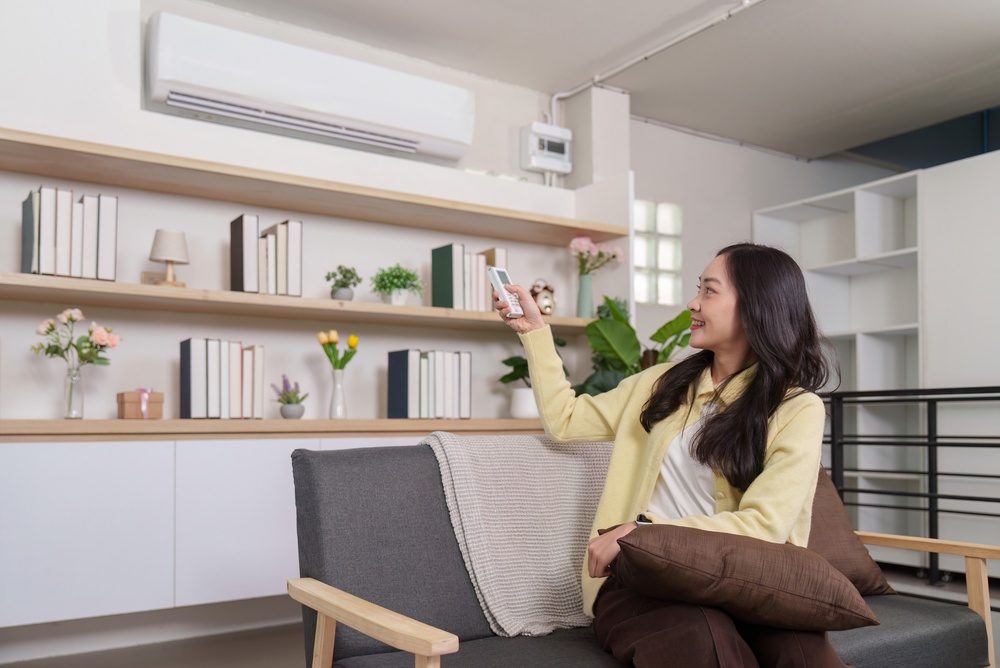
If there's one thing almost everyone in the UAE has in common during summer, it's checking the air conditioning before they do anything else. You step in from 45°C heat, the humidity follows you through the door, and the first instinct is usually to grab the remote and turn the temperature right down.
It feels logical, but it isn't always the cheapest or most comfortable way to cool your home.
Air conditioners in the UAE work harder than they do in most parts of the world. Between June and September, daytime temperatures regularly sit somewhere between 40°C and 50°C. Add the humidity that builds along the coast, and your AC isn't just cooling the air. It's also pulling moisture out of it, often for hours on end.
That's one of the reasons electricity bills can look very different in July compared with January. For many households, cooling is easily the biggest contributor to a summer DEWA bill.
The good news is that you don't necessarily need a new air conditioner to spend less. A few small changes to the way you use the one you already have can make a noticeable difference. The right temperature, the right operating mode and even something as simple as changing the fan speed can improve comfort while reducing energy use.
This guide looks at the settings that matter most, what each one actually does, and when it's worth using them.
What temperature should you set your AC to in the UAE summer?
DEWA recommends setting your thermostat to 24°C or higher for the best balance between comfort and electricity use.
One of the biggest misconceptions is that setting the air conditioner to 18°C or 20°C will cool the room more quickly. It won't. The compressor works at the same capacity until it reaches the temperature you've selected. Choosing a lower number simply means it has to keep running for longer.
That extra run time shows up on your electricity bill.
According to DEWA, every degree below 24°C increases air conditioning energy consumption by around 5%. Put another way, running your system at 20°C could cost roughly 20% to 25% more than keeping it at 24°C, without making the room cool down any faster.
Most people also overestimate how cool a room needs to be. After you've been outside in extreme heat, even 24°C can feel warm for the first few minutes. Give yourself ten or fifteen minutes and your body adjusts surprisingly quickly.
If the room still feels uncomfortable, it's often because of poor air movement or humidity rather than temperature. Before lowering the thermostat, try increasing airflow with a ceiling fan or closing curtains to keep the afternoon sun out. Those small changes often make a bigger difference than dropping the setting by another two degrees.
Cool mode vs Dry mode: which should you use?
Cool mode lowers the temperature, while Dry mode removes moisture from the air.
These two settings are often confused, but they're designed for different situations.
Cool mode is the one you'll use most during the UAE summer. When it's 40°C outside and the walls of the house have absorbed heat all afternoon, the air conditioner needs to remove both heat and humidity. That's exactly what Cool mode is designed to do.
Dry mode takes a different approach. Instead of trying to cool the room as quickly as possible, it focuses on pulling moisture out of the air. The compressor runs in shorter bursts and the fan usually operates at a lower speed.
You notice the difference most on those sticky evenings when the temperature isn't unbearable but the humidity is. The room suddenly feels lighter and more comfortable, even if the thermostat hasn't changed very much.
For homes near the coast, Dry mode can be particularly useful during early mornings or after sunset, when humidity often becomes the bigger issue than heat itself.
Once temperatures start climbing into the high thirties or forties, though, Cool mode is still the better option. Dry mode simply isn't designed to cope with the intense daytime heat that UAE summers are known for.
Auto mode vs Fan-only mode: understanding the difference
Auto mode cools the room only when it's needed, while Fan-only mode simply moves air around.
This is one setting that many homeowners overlook.
When Auto mode is selected, the air conditioner decides when the compressor should run. Once the room reaches the temperature you've chosen, the compressor switches off until cooling is needed again. That cycling helps keep humidity under control and avoids wasting electricity.
It's also the setting DEWA recommends because the system isn't running flat out all day.
Fan-only mode is much simpler. The compressor never comes on. Instead, the indoor fan continues circulating the air that's already in the room.
That breeze can make you feel a little cooler, but it isn't actually lowering the temperature. If the room is already warm, you're simply moving warm air around.
Fan-only mode makes the most sense once the room has already cooled down or during the cooler months of the year. During the height of summer, it's better thought of as an extra comfort feature than a replacement for air conditioning.
Sleep mode: the smartest setting for UAE nights
Sleep mode gradually raises the temperature overnight to reduce energy use without making the room feel warmer.
A lot of people go to bed with the thermostat set much lower than they really need. It feels great when you first climb under the duvet, but by three in the morning the room often feels too cold.
Sleep mode fixes that automatically.
Most modern systems increase the temperature by around 1°C every 30 to 60 minutes until the room reaches somewhere between 24°C and 25°C. Because the change happens gradually, most people never notice it.
Your body temperature naturally drops while you're asleep, so you don't need the room to stay as cold as it did when you first went to bed. Letting the air conditioner ease back a little saves electricity and usually makes for a more comfortable night's sleep as well.
It's one of the simplest settings on the remote, yet it's also one of the least used. If you haven't tried it before, summer is probably the best time to start.
ECO mode and energy saver mode: what they actually do
ECO mode reduces electricity use by limiting how often the compressor runs once the room reaches the target temperature.
There's a common assumption that ECO mode should be left on all summer because it automatically saves energy. That's true in some situations, but not all of them.
Think about a bedroom that's stayed at roughly the same temperature all afternoon because the curtains are closed and the door has been shut. Once the room reaches 24°C, it doesn't take much energy to keep it there. That's where ECO mode works well. The compressor switches off, the fan runs from time to time, and the system only starts cooling again when it's genuinely needed.
The problem comes on those brutal July and August afternoons when the sun has been beating against the windows for hours. Heat is pouring into the room almost as quickly as the air conditioner can remove it. Under those conditions, the compressor often needs to keep working. Switching in and out of ECO mode can actually make the room feel less comfortable because the temperature keeps drifting upwards before cooling starts again.
For most homes, ECO mode makes the most sense in the evening, overnight, or in rooms that don't experience big temperature swings during the day.
AC settings when you're away from home
If you're leaving for a few hours, raise the thermostat instead of turning the system off completely.
A lot of people switch the air conditioner off the moment they leave the house, thinking it's the obvious way to save money. It sounds sensible, but in the UAE it isn't always the cheapest option.
If you're only going out for a few hours, DEWA recommends increasing the thermostat to around 27°C rather than turning the unit off altogether. That way, the house doesn't become an oven while you're away, and the air conditioner doesn't have to work flat out trying to cool everything down when you return.
Longer trips are slightly different.
If you're away for several days, it's still worth leaving one unit running at around 26°C to 27°C. The goal isn't comfort because nobody is home. It's humidity control. Without some cooling, moisture can build up inside the property, increasing the risk of mould, unpleasant smells and damage to furnishings.
If you live in a villa, there's another useful trick. Run the upstairs unit rather than the downstairs one. Cool air naturally sinks, so you're making gravity work in your favour instead of asking the downstairs system to cool the entire house.
How humidity affects your AC settings in the UAE
Humidity changes how your air conditioner performs because it has to remove moisture as well as heat.
Anyone who's lived near Dubai, Abu Dhabi or Sharjah during summer knows that some days feel much worse than the thermometer suggests. That's because your body isn't just dealing with temperature. It's also trying to cope with moisture in the air.
Air conditioners remove two things. They lower the air temperature, and they remove humidity. Engineers call this the latent load, and during the UAE summer it can be substantial.
When humidity is high, many people make the mistake of dropping the thermostat another few degrees. Unfortunately, that often creates a different problem. The room becomes colder than necessary while the air conditioner keeps running in an effort to tackle the moisture.
A better approach is to keep the temperature somewhere between 24°C and 26°C and focus on improving airflow. In many cases, that combination feels more comfortable than a colder room with poor air circulation.
If your home constantly feels damp or sticky, the issue may not be the thermostat at all. It could indicate restricted airflow, dirty filters or an air conditioner that's too large for the room and therefore doesn't run long enough to remove moisture properly.
AC fan speed settings: low, medium, or high?
Low fan speed usually removes more moisture, while high fan speed cools a room more quickly.
Most of us choose fan speed without giving it much thought. High feels powerful, low feels gentle, and Auto lets the air conditioner decide.
Each setting has its place.
If you've just come home and the living room feels like a greenhouse, High fan speed makes sense. It pushes cool air around the room quickly and helps bring the temperature down faster.
Once the room is comfortable, though, it's often worth switching to Low or Auto.
Here's why.
When air moves more slowly across the evaporator coil, moisture has more time to condense. That means better dehumidification, which is particularly helpful during humid UAE weather.
High fan speed does the opposite. Air moves across the coil more quickly, so while the room cools faster, less moisture is removed during each cycle.
For most households, the best routine is surprisingly simple. Use High to cool the room quickly, then switch to Low or Auto once you've reached a comfortable temperature.
Swing and louver settings: directing airflow effectively
Directing cool air across the room works better than pointing it straight at people.
It's easy to assume the fastest way to cool a room is to aim the airflow directly where you're sitting. In reality, that usually makes one person feel cold while the rest of the room stays uneven.
A better option is to angle the louvres horizontally or slightly upwards. Cool air naturally falls, so sending it across the room first gives it a chance to mix with the warmer air before settling.
The result is a more even temperature throughout the space, often without touching the thermostat.
It also helps avoid another common complaint in UAE homes: cold air blowing directly onto the sofa or the bed. Sitting in the path of constant airflow can leave people feeling chilled even though the room itself isn't particularly cold.
Sometimes the solution isn't lowering the temperature at all. It's simply changing the direction the air is travelling.
How to reduce your DEWA bill through smarter AC habits
Small changes to the way you use your air conditioner can make just as much difference as changing the temperature setting.
Most people focus on the thermostat because it's the easiest thing to adjust. In reality, your day-to-day habits have just as much influence on how hard your AC has to work.
One of the simplest jobs is cleaning the filters. During the UAE summer, they collect dust surprisingly quickly. A clogged filter restricts airflow, forcing the system to work harder to cool the room. DEWA estimates that dirty filters can increase electricity consumption by as much as 20%, so checking them once a month is well worth the few minutes it takes.
Sunlight is another factor that's easy to overlook. If your curtains are open all afternoon, your air conditioner is constantly trying to remove the heat pouring through the windows. Closing blinds or curtains during the hottest part of the day helps keep that heat outside where it belongs.
Ceiling fans are worth using too. They don't lower the room temperature, but they help move cool air around, making the room feel more comfortable. That often allows you to increase the thermostat by 1°C or even 2°C without noticing much difference.
Another useful habit is thinking about when you use heat-producing appliances. Running the oven, tumble dryer or washing machine during the hottest part of the afternoon simply adds more heat for your air conditioner to remove. If possible, leave those jobs until the morning or later in the evening.
If you're curious about where your electricity is actually going, DEWA's Consumption Assessment Tool is worth a look. It breaks down household usage and can help you spot patterns you might otherwise miss.
When to consider upgrading your AC unit
If your air conditioner is more than 10 years old, replacing it could reduce both your electricity use and your running costs.
Air conditioners don't suddenly stop being efficient the day they turn ten, but performance does decline over time.
Components wear, refrigerant systems become less efficient, and older equipment simply can't match the performance of today's inverter-driven units. According to DEWA, the average lifespan of a residential air conditioner is around 10 years.
If your system struggles to maintain temperature, runs almost constantly during summer or needs frequent repairs, it may be reaching the point where replacement makes more financial sense than another repair bill.
When shopping for a new unit, pay attention to the ESMA energy label. Models carrying a four- or five-star rating are designed to use significantly less electricity than older systems. In some cases, replacing an ageing air conditioner with a higher-efficiency model can reduce cooling energy consumption by up to 25%.
The upfront cost is higher, but lower monthly bills often help recover that investment over time.
About Daikin
Keeping a home comfortable during a UAE summer takes more than a powerful air conditioner. It takes equipment that's designed to cope with extreme heat, high humidity and long operating hours.
Daikin MEA offers a wide range of residential air conditioning solutions developed specifically for conditions across the UAE, the GCC and the wider Middle East and Africa. From inverter split systems to energy-efficient cooling technologies designed for high ambient temperatures, the focus is on delivering reliable comfort while keeping electricity use under control.
If you're looking for advice on the best AC settings for summer in the UAE or thinking about upgrading to a more efficient system, Daikin can help you choose a solution that suits both your home and your lifestyle.
Frequently asked questions about AC settings in the UAE summer
What is the best AC temperature to set in Dubai in summer?
DEWA recommends setting your air conditioner to 24°C or higher during summer. This provides a good balance between comfort and energy efficiency while avoiding unnecessary electricity use. However, your ideal setting may vary slightly depending on factors such as humidity, insulation and how much direct sunlight your home receives.
Should I turn my AC off when I leave the house in summer?
For short trips, it's usually better to raise the thermostat to around 27°C than switch the system off completely. This prevents the house from becoming extremely hot while reducing electricity use compared with normal cooling. However, if you're going away for several days, it's worth leaving one unit running at around 26°C to 27°C to help control humidity.
Is Dry mode better than Cool mode in UAE humidity?
Dry mode is better when humidity is making the room uncomfortable but temperatures aren't extremely high. It removes moisture from the air without cooling as aggressively as Cool mode, which can improve comfort during humid mornings and evenings. However, during peak summer afternoons, Cool mode remains the better choice because it deals with both heat and humidity.
Does Sleep mode save electricity on an AC?
Yes, Sleep mode can reduce overnight electricity consumption by gradually increasing the temperature while you sleep. Most systems raise the temperature by around 1°C every 30 to 60 minutes, helping the compressor run less frequently through the night. However, the amount you save depends on your room size, insulation and the outdoor temperature.
Getting the most from your air conditioner isn't about making your home as cold as possible. It's about finding the settings that keep you comfortable without making the system work harder than it needs to. If you'd like advice on choosing the right air conditioning system or getting the best performance from the one you already own, contact us and speak to the team at Daikin MEA.