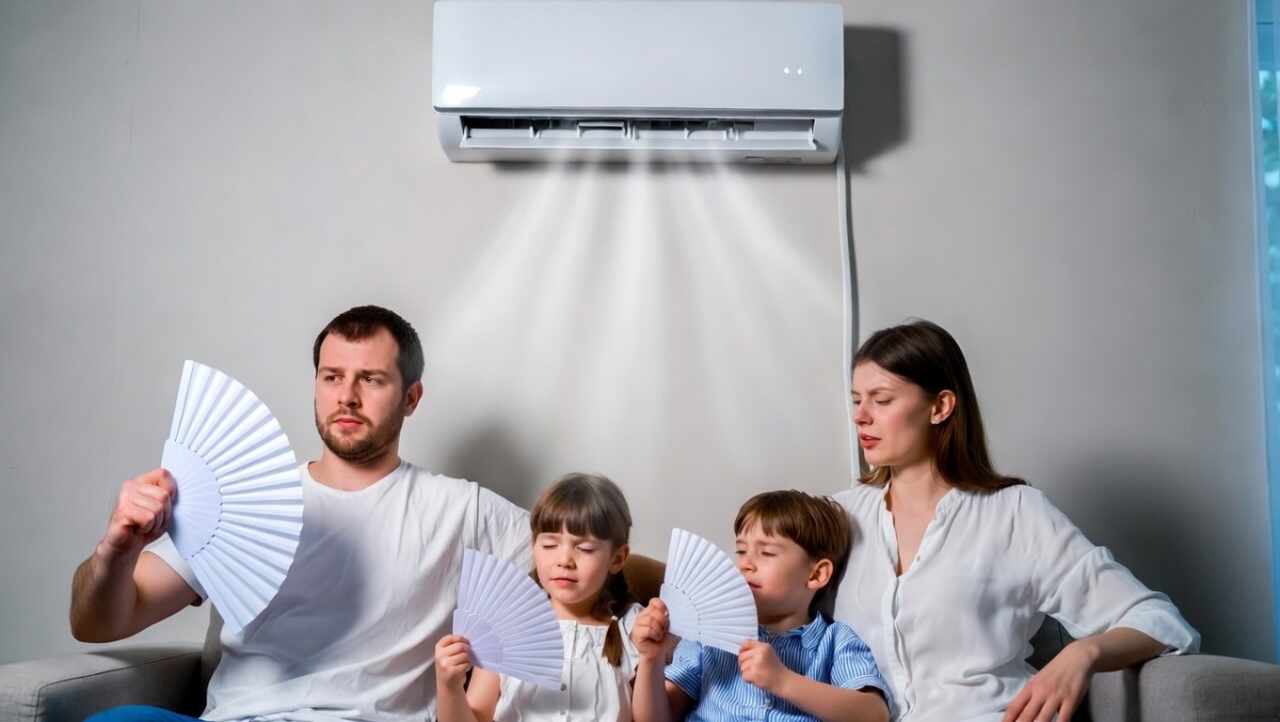
It’s one of the more frustrating AC moments. You switch the system on, you can hear it running, air is definitely coming through the vents… but the room just isn’t cooling down. You wait a bit, thinking maybe it needs time. Then a bit longer. Still nothing.
At that point, it stops feeling like a minor issue and starts feeling like something is off.
The confusing part is that the system doesn’t seem broken. It’s working. Air is moving. It just isn’t doing the one thing you actually need it to do.
This is a fairly common problem, and more often than not, it comes down to a handful of underlying issues that affect how the system cools, not whether it runs.
Troubleshooting an air conditioner that will not cool
When an AC is blowing air but not cooling properly, it usually means the system is running but something is preventing it from removing heat effectively.
Cooling isn’t just about pushing air around. Your AC needs to absorb heat from inside the space and release it outside. If any part of that process is disrupted, you end up with airflow that feels… underwhelming.
Sometimes it’s something simple, such as restricted airflow. Other times, it’s tied to refrigerant levels, sensors, or internal components that aren't working as efficiently as they should.
Either way, the system is trying to do its job. It just doesn’t have everything it needs to do it properly.
Dirty filters and restricted airflow
This is usually the first place to look, and for good reason.
Clogged air filters
Air filters quietly collect dust, dirt, and whatever else is floating around in your space. Over time, they can become quite packed. When that happens, airflow drops. The system struggles to pull in enough air, cool it, and push it back out effectively. It doesn’t always stop the AC from running. It just makes it far less effective.
Blocked vents or ducts
Sometimes the issue isn’t inside the unit, but in the space itself. Blocked vents, closed registers, or even furniture placed in the wrong spot can restrict airflow. When cool air can’t circulate properly, certain areas stay warm while the system keeps running in the background. It’s one of those small things that’s easy to overlook.
Refrigerant or compressor issues
If airflow seems fine but the air still isn’t cold, the issue often sits deeper within the system.
Low refrigerant levels
Refrigerant is what allows your AC to absorb heat from the air. If levels are low, the system can’t remove heat efficiently. The result is air that feels closer to room temperature than properly cooled.
Low refrigerant doesn’t just disappear on its own, though. It usually indicates a leak somewhere in the system that needs attention.
Compressor problems
The compressor is essentially the engine of your AC system. If it’s not working properly, the entire cooling cycle is affected. The system may still run and air may still flow, but without the compressor doing its job, cooling simply doesn’t happen as it should.
Compressor issues tend to be more serious and usually require professional inspection.
Thermostat and electrical problems
Sometimes the issue isn’t mechanical at all. It’s more about communication.
Incorrect thermostat settings
It sounds obvious, but it happens more often than you’d think. If the thermostat is set incorrectly, or even just slightly off, the system might not be cooling as expected. It could be running in fan mode, set to a higher temperature, or simply not calibrated properly.
Sensor or calibration issues
Thermostats rely on sensors to detect the temperature in a space. If those sensors are faulty or poorly positioned, the system may think the room is cooler than it actually is. That leads to reduced cooling output or inconsistent performance.
Electrical faults
Loose connections or minor electrical issues can affect how different components communicate with each other. The system may still turn on, but certain functions, especially those related to cooling, may not operate correctly.
When to call an HVAC technician
Some issues are easy to spot and fix. Others are not.
If you’ve checked the basics, such as the filters and thermostat settings, and the system is still not cooling properly, it’s time to bring in a professional.
Persistent warm airflow, unusual noises, or signs of refrigerant issues are all good indicators that the problem runs deeper than a simple adjustment.
It’s also worth noting that running an AC in a compromised state can put additional strain on the system. What starts as a small issue can become something more expensive if left unchecked. Getting it looked at early tends to save time and money in the long run.
FAQs about AC cooling problems
Why is my AC running but the house isn’t cooling?
This often comes down to restricted airflow, low refrigerant levels, or internal components not functioning as they should.
Can low refrigerant cause weak cooling?
Yes, very much so. Without enough refrigerant, the system cannot effectively remove heat from the air.
How do I know if my compressor is failing?
Signs include warm air despite the system running, unusual noises, or the unit struggling to maintain temperature.
Does regular maintenance prevent cooling issues?
It doesn’t eliminate every possible issue, but it significantly reduces the likelihood of common problems developing.
About Daikin
Daikin designs air conditioning systems with reliability and performance in mind, particularly in climates where consistent cooling isn’t optional, it’s expected.
By focusing on efficient operation, stable airflow, and long-term durability, Daikin systems are built to handle everyday use without unnecessary strain. When properly maintained, they deliver steady, dependable cooling even during the hottest periods.
Because when your AC is working properly, you don’t really notice it. And that’s exactly the point.