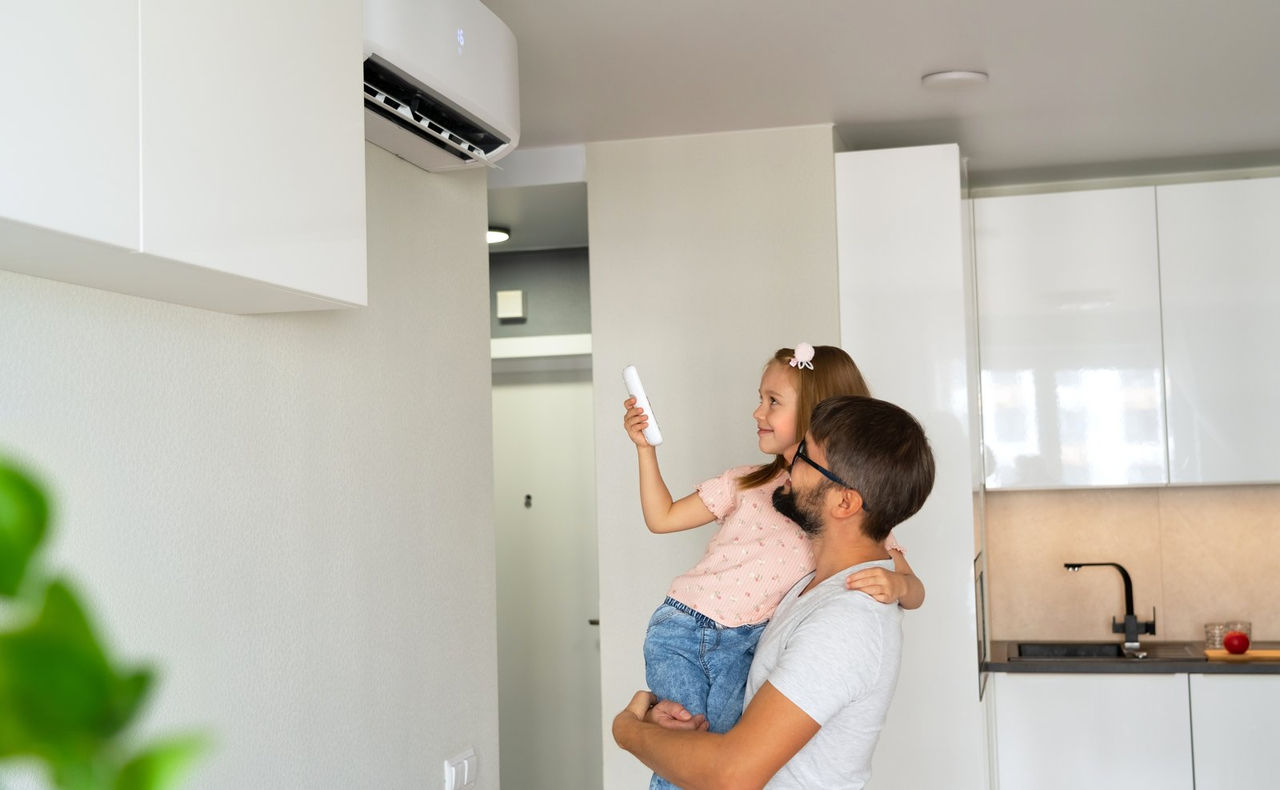
The way we interact with our homes is changing dramatically. In the Middle East, where climate control is not a luxury but a necessity, the development of HVAC technology has become a story of going far beyond simple on/off control. We are now witnessing a rise of smart AC controllers, which are bridging the gap between traditional cooling devices and the digital era. These controllers are transforming modern HVAC systems from simple machines into smart, interactive environments.
Through the incorporation of WiFi and sensors, these smart controllers deliver a level of precision and convenience that was once out of reach. If your goal is to reduce your carbon footprint or simply have a chilled living room when you get back home, a smart AC system is the gateway to a modern and efficient lifestyle.
Smart AC controllers explained: How WiFi thermostats and remote controls work
A smart AC controller is a device with internet connectivity that enables the user to control the heating, ventilation, and air conditioning systems through a smartphone, tablet, or voice assistant. Traditional thermostats require the manual input of the user, but smart controllers function as the brains of the HVAC system.
Connecting the ecosystem
These devices connect to your home's WiFi network, creating a communication channel between the air conditioning unit and a dedicated mobile application. This connectivity enables the HVAC system to become part of a larger smart home system, which can be connected effortlessly to popular platforms such as Amazon Alexa, Google Home, or Apple HomeKit. Using cloud-based servers, instructions sent from a phone in another city are executed in milliseconds.
How WiFi thermostats work
WiFi thermostats are currently the most widespread type of smart controllers. Rather than a simple wall-mounted panel, they incorporate an advanced control unit capable of handling complex data processing.
Connectivity and sensors
WiFi thermostats are usually equipped with internal modules that perform continuous communication with your router. Besides just displaying temperature, many units come with features like occupancy sensors and humidity sensors. These devices detect whether a room is occupied and adjust output levels accordingly, avoiding energy waste in unoccupied spaces.
Scheduling and learning
Intelligent scheduling is one of the greatest advantages of these devices. Unlike old-school timers, these smart thermostats can learn from your lifestyle. Gradually, they learn your work schedule and the times you return home, adjusting the temperature accordingly without any input from you. A few higher-end versions are equipped with geofencing, which uses your smartphone’s GPS to turn on the AC as you approach home within a set distance.
Role of remote controls in modern HVAC systems
Although a wall-mounted thermostat is the classic control point, the remote control has also received a digital upgrade.
Traditional remotes: These rely on Infrared (IR) signals and need a direct line of sight to the unit. Even though they are dependable, they do not provide any feedback; you cannot check the status of your AC if you are not in the room.
Smart remotes: Today's smart remotes or hubs frequently serve as IR blasters. They convert WiFi signals from your phone into IR instructions for the AC. This effectively makes a conventional AC unit smart, through an interface on your mobile device that shows in real-time temperature data and filter status.
By expanding control options, these remotes ensure you are never out of touch with your comfort, no matter where you are in the house.
Benefits of smart AC controllers
Investing in smart air conditioning technology delivers real returns, both in quality of life and energy savings.
Remote access: Being able to monitor and control your air conditioning from anywhere in the world through your mobile device provides genuine peace of mind. Imagine if you forgot to switch off your air conditioner and you are already on your way to the airport, simply access your smartphone and switch it off.
Energy savings: Through the use of optimized cooling cycles and eco modes, smart controllers are capable of lowering electricity consumption significantly. Even modest efficiency gains can translate to significant reductions in utility bills in a region like the Middle East where summers are extremely harsh.
Automation: Set up ‘scenes’ in which your air conditioner is able to communicate with your other devices. For instance, when your smart blinds close to block out the sun, your air conditioner can automatically change to a mode with lower power.
Better comfort: A smart controller maintains a much tighter temperature range than a manual one, preventing the too-cold-then-too-hot fluctuations typically associated with older systems.
Choosing the right smart AC controller
Not all controllers are equal. When choosing a controller for your home, the key is matching it to your specific needs:
Compatibility: This is the most important aspect. Make sure the controller works with your HVAC type; whether it is a split system, ducted unit or VRV/VRF.
Feature Set: Would you like voice control? Is a geo-fencing feature significant for you? Find a system that corresponds to your way of living.
Ease of Use: Navigating the mobile application should be simple and user-friendly. A smart device is only worthwhile if it simplifies your life, not complicates it.
Budget: Although smart controllers come with a higher price tag, their added value in the form of energy savings usually leads to a payback period of 12 to 24 months.
FAQs about smart AC controllers
Can I control my AC remotely using WiFi?
Yes. As long as your central smart control is linked to the Wi-Fi network in your house and your mobile device can access the internet via 4G/5G or another Wi-Fi network, you will be able to handle your system wherever you are on the planet.
Are smart thermostats compatible with all AC systems?
Many new systems are compatible with the latest features, but some legacy units may require an IR-based smart controller instead of a hard-wired WiFi thermostat. It is always a good idea to check the manufacturer's compatibility list.
Do smart controllers reduce energy consumption?
Yes, they can. In addition to enabling accurate scheduling and occupancy detection, smart controllers also optimise your system through data-driven insights. As a result, they generally cut down on energy consumption by 10% to 25%.
Is installation complicated?
Several plug-and-play smart remotes can be installed in minutes. On the other hand, hard-wired WiFi thermostats often require a professional installation to ensure the wiring is compatible with your HVAC system's control board.
About Daikin
Daikin is a worldwide leader in air conditioning and is at the forefront of the smart HVAC revolution. To address the specific climatic challenges of this region, Daikin Middle East offers a wide range of advanced controllers.
With products like the Daikin Residential Controller app and different types of wired and wireless devices, Daikin is bringing its users closer than ever to their home systems. Daikin is guided by two priorities: human comfort and energy efficiency.
When you buy a Daikin product, not only do you get effective cooling, but also a system that intelligently adapts. Whether it is through integration with smart home hubs or the application of AI-driven cooling logic, Daikin continues to push boundaries and demonstrate what a modern HVAC system can achieve.