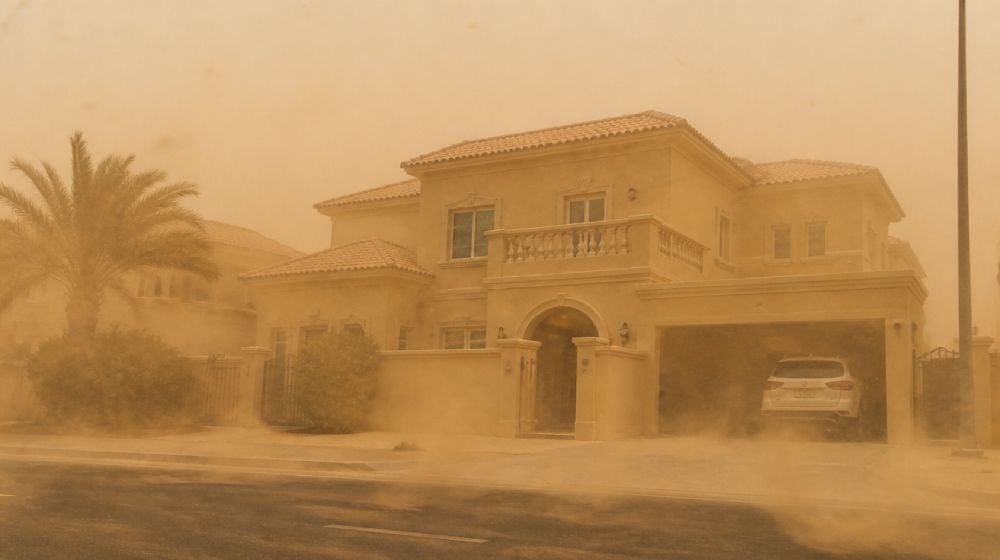
Sandstorms don't just reduce visibility and coat your balcony in a layer of dust, they push fine sand and grit directly into both the outdoor and indoor components of your air conditioning system. That intrusion clogs filters, coats condenser coils, and forces the unit to work harder than it should to deliver the same cooling. Understanding exactly how that damage happens is the first step to protecting your system, and a handful of practical habits before, during, and after a storm — can make the difference between routine wear and a shortened equipment lifespan.
For anyone living in a region where sandstorms are a seasonal reality rather than a rare event, this isn't a one-off concern it's a recurring stress test that your AC system faces several times a year. Treating that stress test seriously, with the right preparation and follow-up, is what separates a system that keeps performing efficiently for a decade or more from one that starts underperforming and breaking down well ahead of schedule.
How sandstorm dust actually gets into your AC system
It's tempting to assume that a well-sealed home or building is safe from sandstorm dust, but the reality is more stubborn. Fine desert dust, high in silica content, is light enough to slip through gaps around sliding doors, window frames, and balcony thresholds — openings that are practically invisible in normal conditions but become entry points once wind pressure builds during a storm.
Once that dust is inside, it doesn't stop at the surface of your furniture. Much of it makes its way into the AC system itself, where it's fine enough to bypass many of the filters designed to stop it. Common filter types, like the aluminum mesh filters used in many fan coil units, are effective against larger particles but were never designed to catch particles as small as those carried in a sandstorm. That combination, easy entry points and filters that can't fully keep up, is why sandstorms hit AC systems especially hard compared to routine dust exposure.
The effect on air filters
Filters are the AC system's first line of defense, and during a sandstorm they take the brunt of the load. Under normal conditions, a filter might go weeks or months before needing attention. During a sandstorm, that same filter can become visibly clogged within hours, as sand and dust accumulate faster than the system can push air through cleanly.
A clogged filter restricts airflow, which means the system has to work harder to move the same volume of air, and cooling output drops even as energy consumption rises. This is usually the first and most noticeable sign that a sandstorm has taken a toll — reduced airflow, weaker cooling, or a system that seems to be running constantly without keeping up. Left unchecked, restricted airflow also increases strain on the fan motor, extending the problem beyond the filter itself.
The effect on condenser coils
While filters deal with dust that enters through gaps in the building, the outdoor condenser coil is exposed to sandstorm conditions directly. As wind carries dust and grit across the coil's fins, particles settle into the tight spacing between them, gradually building a layer that blocks proper heat exchange.
This matters because the condenser coil's entire job is to release heat from the refrigerant into the outside air. When dust coats the fins, that heat transfer becomes far less efficient, and the compressor has to run longer and harder to achieve the same cooling result. Over time, that added strain shows up in two ways: higher energy bills from the extra work, and accelerated wear that can shorten the compressor's operating life if the coil isn't cleaned regularly.
Impact on indoor air quality
The particles that make it past your filters don't just affect the mechanical side of the system — they end up circulating through your ductwork and back into the rooms you're trying to keep comfortable. Fine dust from sandstorms, including PM2.5-sized particles, is small enough to remain airborne for extended periods and difficult for standard filtration to fully capture.
For most people, this shows up as watery eyes, coughing, or a scratchy throat during and after a storm. For anyone with allergies or a respiratory condition like asthma, the effect can be more pronounced, since sustained exposure to fine airborne particles is a known aggravator of these symptoms. This is one of the strongest reasons to treat sandstorm season as a trigger for closer AC maintenance rather than something to deal with only when performance visibly drops.
Long-term wear on fans, motors, and electrical components
Beyond the immediate effects on filters and coils, sandstorms contribute to a slower, cumulative kind of damage. Dust that works its way into fan housings and around electrical connections adds friction and resistance to moving parts, while grit around wiring and connectors can accelerate corrosion and wear over repeated exposure.
This kind of damage is easy to overlook because it doesn't announce itself the way a clogged filter does. A fan motor doesn't usually fail outright after one storm — it wears down gradually, storm after storm, until a component finally gives out, often at an inconvenient time and at a higher repair cost than if the wear had been caught earlier. This is the core argument for preventive care over reactive repair: by the time long-term wear becomes obvious, it's already cost you in efficiency and equipment life for months or years beforehand.
Electrical connections deserve particular attention in this context, since corrosion caused by fine dust and residual moisture can create loose or degraded contacts over time. A connection that starts out slightly corroded rarely causes an immediate fault, but it can gradually increase resistance, generate excess heat, and eventually contribute to a component failure that seems to come out of nowhere. Routine inspection during annual servicing is the most reliable way to catch this kind of slow-building risk before it turns into an unplanned breakdown.
Preparing your AC unit before a sandstorm
When a sandstorm is forecast, a few preparation steps can meaningfully reduce how much dust makes it into your system. Check that any cover on the outdoor unit is intact and properly fitted, and inspect window and balcony door seals for gaps that dust could exploit during high winds. Clearing loose debris from balconies and around the outdoor unit beforehand also reduces the amount of material available to be blown directly into the equipment.
For units in particularly exposed locations, a breathable weatherproof cover offers an added layer of protection, shielding the coil and internals from direct sand exposure while still allowing airflow. Some homeowners in dust-prone regions also install a hail guard or similar protective housing over the outdoor unit, which helps deflect wind-driven debris away from the coil surface without blocking normal operation.
Should you turn off your AC during a sandstorm?
For severe or prolonged storms, shutting the system down while the worst of it passes can protect the coils, fan motor, and filters from being overwhelmed by an unusually heavy dust load. This isn't practical for every household, especially in peak summer heat, so switching the system to recirculate or recycle mode is a reasonable middle ground — it keeps conditioned air moving through the space while reducing how much fresh, dust-laden outdoor air gets pulled in.
What to do after a sandstorm passes
Once the storm has cleared, a prompt inspection makes it much easier to catch and fix problems before they compound. Start by checking and replacing the filter if it shows visible clogging, since this is the single most common issue after a storm and the easiest to resolve. Take a look at the outdoor unit for visible dust or dirt coating the coils, and check vents and grilles inside the home for accumulated buildup that could be recirculating back into the air.
If the storm was severe, prolonged, or if you notice reduced cooling performance that doesn't improve after a filter change, it's worth scheduling a professional cleaning rather than waiting to see if the problem resolves on its own. A trained technician can access and clean components — like the inside of the coil or the drain pan — that aren't practical to reach with a simple household inspection.
Cleaning condenser coils safely
Homeowners comfortable with basic maintenance can gently clean the outer surface of the condenser coil themselves, typically using a soft brush or low-pressure water to dislodge surface dust without bending the delicate fins. For units that have weathered heavy or repeated sandstorms, though, a professional deep clean is the safer route, since it reaches embedded dust between the fins and inspects for wear that isn't visible from the outside.
Building sandstorm resilience into your maintenance routine
The single most effective habit during sandstorm-prone months is simply increasing how often you check and replace filters, since this is where the majority of storm-related strain shows up first. Pairing that with at least one professional AC service scheduled ahead of peak sandstorm season — rather than after problems appear — helps catch coil buildup, fan wear, and drain issues before they affect performance or comfort.
It's worth remembering that sandstorm damage is cumulative rather than a one-time event. A single storm rarely causes serious harm on its own, but repeated exposure without consistent upkeep compounds over a season, and eventually over the life of the unit. Building sandstorm resilience into your regular maintenance calendar, rather than treating each storm as an isolated event, is what actually protects the system's efficiency and lifespan over time.
About Daikin
Daikin has spent more than 100 years engineering HVAC systems built to perform reliably in demanding conditions, with a strong regional presence across the Middle East and Africa where sandstorms are a routine part of the operating environment. Daikin's filtration and coil technology is built to withstand the impact of sandstorms on your AC unit, helping systems maintain efficiency and airflow even through the region's harshest dust conditions, while remaining straightforward to inspect and service after a storm passes.
Frequently asked questions about sandstorms and AC units
Can a sandstorm damage an AC unit permanently?
A single storm rarely causes permanent damage on its own, but repeated exposure without follow-up maintenance can shorten the unit's lifespan through accumulated coil wear and motor strain. In most cases, lasting damage is the result of neglect after several storms rather than any one event by itself.
How often should I change my AC filter during sandstorm season?
A monthly filter change is a reasonable standard during periods of frequent sandstorms, compared with roughly every two to three months in calmer weather. This single habit addresses the majority of the airflow and efficiency issues that sandstorms tend to cause.
Does covering my outdoor AC unit help during a sandstorm?
A breathable, weatherproof cover can meaningfully reduce debris buildup on the outdoor unit during a storm. It's important to avoid non-breathable covers, though, since they can trap moisture against the unit and create a separate set of problems — and any cover should be removed once the storm passes so the unit can return to normal operation.
Why does my AC blow dusty air after a sandstorm?
This usually means dust bypassed the filter during the storm and settled in the ductwork or on the coils, and is now being stirred up and circulated as the system runs. Start with a filter check, and if dusty air or odors persist, a professional duct and coil cleaning is the next step.