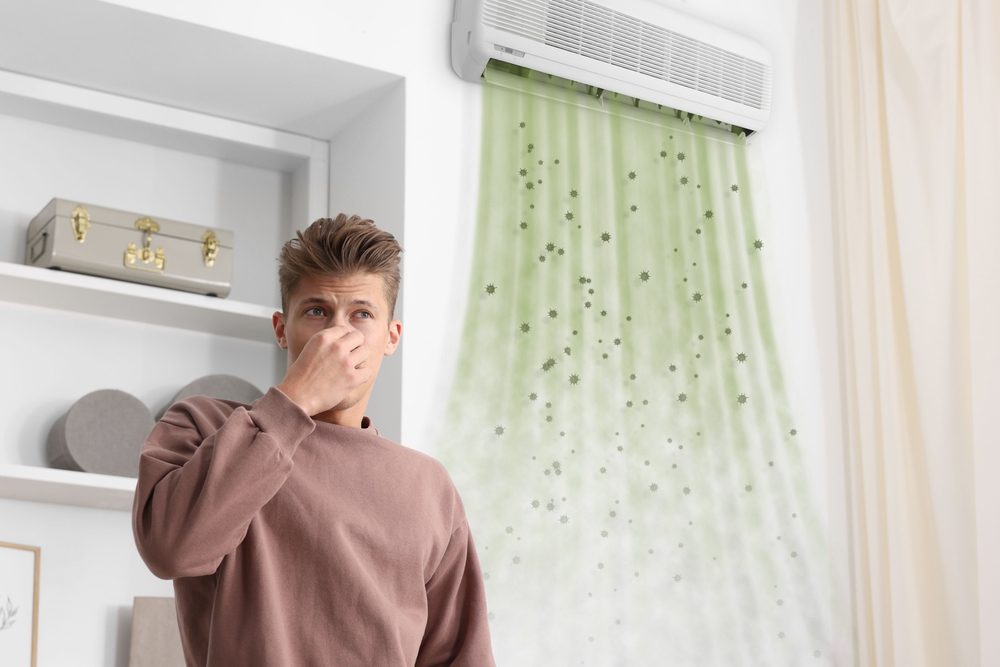
A bad smell when you first switch on your AC almost always comes down to one thing: something has been sitting inside the system while it was off, and the first rush of airflow is pushing it straight into your room. In most cases, that something is trapped moisture, accumulated dust, or a buildup of bacteria on components that stay damp between uses. The good news is that nearly every cause is identifiable just from the smell itself, and most are simple to fix. A smaller number point to something more serious, and knowing the difference can save you an unnecessary repair bill — or help you catch a real problem before it gets worse.
It helps to think of your AC's smell as a diagnostic signal rather than just an annoyance. Different odors trace back to different parts of the system — the coil, the drain line, the filter, the wiring — and each one calls for a different response. Learning to tell them apart means you can act with confidence instead of guessing, whether that means a five-minute filter check or an urgent call to a technician.
Why AC smells are common at first startup
Whenever an air conditioning unit sits idle — overnight, over a weekend, or across an entire off-season — dust, moisture, and organic debris quietly build up inside it. Coils stay damp long after the compressor shuts off, drain pans collect stray water, and dust settles across filters and ductwork. The moment you switch the unit back on, all of that trapped air gets forced out through the vents in one concentrated burst.
That's why the smell is often strongest in the first few minutes and fades as fresh air starts circulating. The dilution effect can make it feel like the problem has resolved itself, but the underlying cause — mold, bacteria, dust, or a blockage — is usually still sitting inside the system. If the smell keeps coming back every time you start the unit, that's a sign the source hasn't actually been dealt with.
Musty or moldy smell
A musty, damp-basement smell is one of the clearest signals that mold or mildew has taken hold somewhere in the system, most commonly on the evaporator coils or inside the drain pan. Air conditioners are, by design, magnets for moisture — they pull humidity out of the air as part of the cooling process, and any of that moisture that lingers instead of draining away becomes a breeding ground for mold spores.
This smell tends to show up most in humid climates, where the air being processed carries more moisture to begin with. Left unaddressed, it doesn't just stay unpleasant — mold growth inside ductwork can aggravate allergies and asthma for anyone in the home, and it tends to spread rather than resolve on its own.
"Dirty sock" smell
If the odor reminds you specifically of old gym socks, you're likely dealing with what HVAC technicians call dirty sock syndrome. This happens when bacteria colonize a dirty evaporator coil, feeding on the dust and grime that has built up on its surface. As air passes over the coil during cooling, it picks up the bacterial odor and carries it straight into your living space.
This particular smell shows up more often in humid conditions, where coils stay wetter for longer between cooling cycles, giving bacteria more time to establish themselves. It's rarely dangerous on its own, but it's a clear sign the coil needs a proper cleaning rather than just a filter swap.
Musty, dusty smell
A drier, dustier odor — without the dampness of a mold smell — usually just means dust, pet hair, and general debris have settled inside the unit while it was off. This is the mildest and most common cause of startup odors, and it typically clears up on its own within the first few minutes of operation, especially once you've changed the filter.
Unlike mold or bacterial smells, this one doesn't usually indicate an underlying problem beyond routine dust accumulation. If it lingers well beyond the first few uses, though, it's worth checking whether the filter itself needs replacing rather than just clearing out.
Sewage or rotten egg smell
A smell resembling sewage or rotten eggs points most often to a clogged condensate drain line or drain pan, where sludge, algae, and debris have built up over time and started to decompose. Because the drain line runs from inside the unit to the outside of the building, a blockage there can trap standing water long enough to develop a genuinely foul odor.
In rare cases, a rotten egg smell can also indicate a sewer gas issue unrelated to the AC itself, particularly if the smell persists even when the unit is off. If you notice this smell only when the AC is running, though, the drain system is the far more likely culprit and the place to start investigating.
Burning or chemical smell
Unlike the other odors on this list, a burning or chemical smell is not something to wait out. This can indicate overheating components, worn-out motors, frayed wiring, or a malfunctioning capacitor — all electrical issues that carry real safety risk if ignored. A sweet or chemical odor, meanwhile, can point to a refrigerant leak, which affects both system performance and, in higher concentrations, indoor air safety.
If you notice either type of smell, the safest move is to turn the unit off at the breaker and call a professional rather than attempting to diagnose or fix it yourself. Electrical and refrigerant issues inside an AC system aren't something to troubleshoot without the right training and equipment.
What to check before calling a professional
For the more common, non-electrical odors, there are a few simple steps worth trying before booking a service call. Start by inspecting the air filter — a dirty or clogged filter is behind a large share of musty and dusty smells, and replacing it is often enough to solve the problem outright. Next, check the condensate drain line for blockages, since a clear line prevents the standing water that leads to sewage-like odors. Finally, let the system run for a while with windows open to help clear out any stale, trapped air that built up during the idle period.
These three steps resolve the majority of odor complaints that don't involve electrical components or a burning smell. If the odor persists after trying them, that's a good indication the issue runs deeper than surface-level dust or a simple filter change.
Clearing a clogged condensate drain line
To check the drain line, locate where it exits near the outdoor unit and pour a small amount of water through it to see whether it flows freely. If the water backs up or drains slowly, the line is likely blocked. A wet/dry vacuum applied at the outdoor end can often pull the blockage free, and gently blowing air through the line can help dislodge lighter debris.
Some homeowners flush the line periodically with a mixture of vinegar and hot water to break down algae and sludge before it becomes a full blockage. This is a reasonable preventive habit, though it's worth doing gently to avoid damaging the line or any connected fittings.
When a bad AC smell signals a bigger problem
Most startup odors fade within a few minutes and don't return once you've dealt with the underlying dust or moisture. It's the smells that don't follow this pattern that deserve more attention. If an odor persists for more than a few days, gets noticeably stronger over time, or has any electrical, chemical, or "melting plastic" quality to it, that's a sign the issue goes beyond routine buildup.
Ignoring these warning signs risks two things: further damage to the system itself, and potential health impacts from prolonged exposure to mold, bacteria, or airborne chemical compounds. Catching a persistent or worsening smell early generally means a simpler, cheaper fix than waiting until the underlying issue has had time to spread.
Preventing bad AC smells going forward
The most effective way to avoid startup odors altogether is routine maintenance rather than reactive troubleshooting. Replacing filters on a regular schedule — more frequently during dusty or humid seasons — keeps the system from accumulating the debris that causes most mild odors in the first place. Scheduling an annual professional cleaning of the coils and drain pan addresses the buildup that a filter change alone can't reach, particularly the bacterial growth behind dirty sock syndrome.
It also helps to run the system periodically even during months when you're not relying on it heavily, since a unit that sits completely idle for long stretches gives moisture more time to collect and mold more time to establish itself. Running the fan alone for short stretches, even without active cooling, can keep air moving through the coils and ductwork and reduce the stagnant conditions that odors thrive in.
It's also worth paying attention to humidity levels in the space the unit serves, since consistently high indoor humidity feeds the same mold and bacterial growth that causes musty and dirty-sock smells. Where possible, keeping indoor humidity in a moderate range reduces the moisture available for growth in the first place, easing the load on the AC's own dehumidifying function. Framed this way, preventing bad smells isn't really a separate task from general AC upkeep — it's simply a visible symptom of how well the rest of the system is being maintained, and a useful early warning sign when something isn't.
About Daikin
Daikin has spent more than 100 years engineering air conditioning and HVAC systems built for reliability across a wide range of climates, with a strong regional presence across the Middle East and Africa. Its residential and commercial systems are designed with accessible coils, drain components, and filtration that make routine servicing straightforward, which matters directly for preventing startup odors. Regular servicing of Daikin systems helps prevent the moisture and dust buildup behind most cases where your AC smells bad when you first turn it on, keeping systems running cleanly through the region's demanding cooling seasons.
Frequently asked questions about AC smells at startup
Is it normal for AC to smell bad the first time you turn it on each season?
Yes — a brief dusty or slightly burnt smell is common after a long idle period, as accumulated dust on internal components burns off during the first few minutes of operation. This should clear within the first few uses; if it persists well beyond that, it's worth a closer look rather than assuming it will resolve on its own.
Can a bad AC smell make you sick?
It can, particularly with mold, mildew, or bacterial odors, which are known to trigger allergy symptoms, coughing, and general respiratory irritation in sensitive individuals. It's better to address musty smells directly through cleaning or servicing than to mask them with air fresheners, which don't remove the underlying source.
Should I turn off my AC if it smells like burning?
Yes, immediately. A burning smell can indicate an electrical fault — from worn wiring to a failing motor — that poses a genuine fire risk if the unit keeps running. Shut the system off at the breaker and have a professional inspect it before turning it back on.
How often should I clean my AC to prevent bad smells?
As a general guideline, replace filters every one to three months depending on usage and how dusty your environment is, and schedule professional coil and drain cleaning at least once a year. Homes in dustier or more humid environments typically need more frequent attention to stay ahead of odor-causing buildup.
For help diagnosing or resolving persistent AC odors, contact us to speak with the Daikin MEA team.