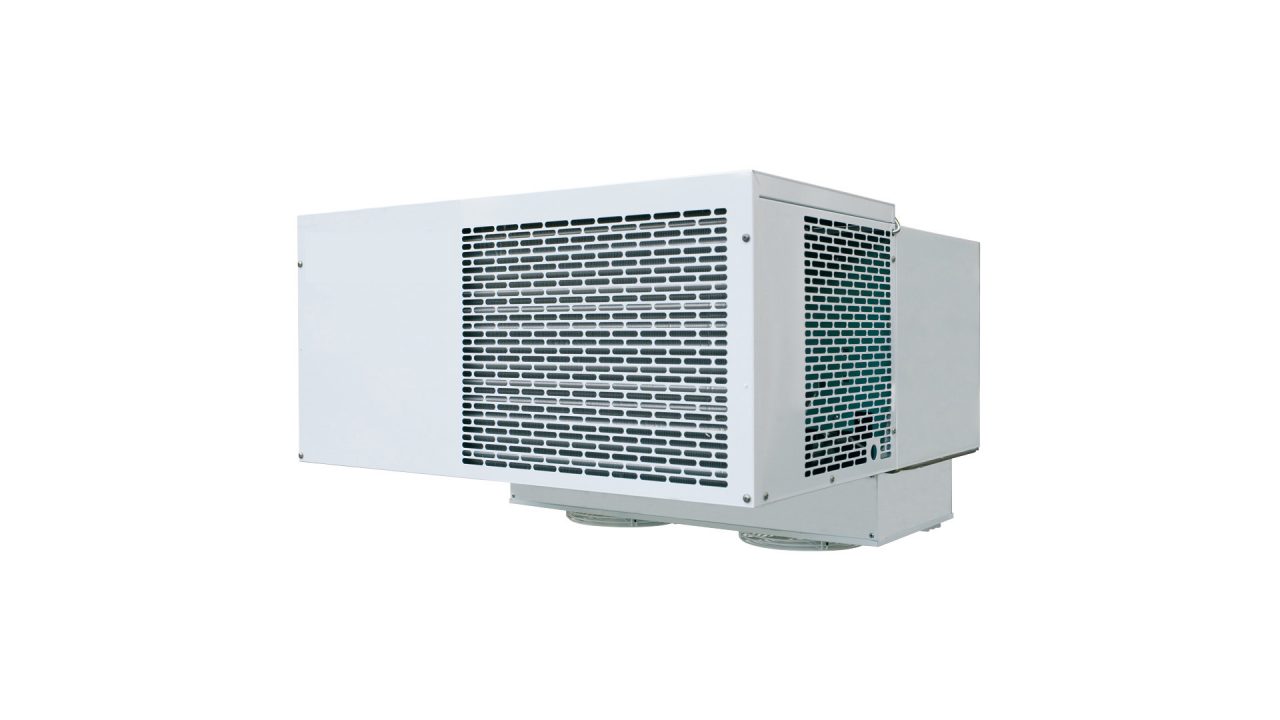
Walk into almost any commercial kitchen, supermarket, or pharmaceutical facility and you'll find some form of refrigeration keeping things running. In an environment where the wrong temperature, even briefly, can mean spoiled stock, failed audits, or worse, having the right refrigerator is essential.
The problem most businesses run into is figuring out which system makes sense for their space, their budget, and their setup. The traditional answer has long been split systems, and they're still the default choice for many contractors across the UAE. They're cheaper upfront, which makes them an easy sell. But that initial saving often gets eaten up over time through higher installation complexity, greater maintenance demands, and steeper running costs. It's a trade-off that doesn't always get explained clearly at the point of purchase.
Which is why, when looking at your refrigeration needs, monoblock units may be a better solution. No complicated pipework, no separate outdoor condenser unit to worry about, no drawn-out installation. Just a single, self-contained system that does the job, and does it more economically over the long run. This article walks through what monoblock refrigeration units are, what's inside them, where they're used, and what to keep in mind if you're running one.
Monoblock refrigeration unit: explained
The simplest way to understand a monoblock unit is to compare it to what came before. Traditional split systems divide the job between two separate units: the condenser sits outside or in a plant room, the evaporator sits inside the cold room, and a network of refrigerant pipes connects the two. It works, but it's a bigger job to install and maintain, and those costs add up over time.
A monoblock puts everything into one housing. Compressor, condenser, evaporator, and expansion device are all in a single module, pre-assembled and pre-charged with refrigerant at the factory. You mount it to a wall, a door panel, or a ceiling, connect the power, and it's running. That's the appeal.
These units come in commercial versions, designed for smaller to medium-sized cold rooms, and industrial versions built for larger storage rooms and loading bay environments. Temperature-wise, they cover the full spectrum from chilled storage at a few degrees above zero right down to around -25°C for frozen goods.
Key components of a monoblock refrigeration unit
The basics of any refrigerator are, more or less, the same. The monoblock just does all of this in one place rather than spreading it across two units.
It all starts with the compressor. This is what drives the whole system. It pressurises the refrigerant gas, which heats it up in the process, and keeps it moving around the circuit. A good compressor is efficient and consistent, whereas a worn or undersized one will show up on your energy bills long before anything visibly breaks down.
From there, the hot pressurised gas moves into the condenser coils. Here it releases that heat and shifts back into liquid form. Fans pull air across the coils to carry the heat out. Because this all happens inside the monoblock casing, that warm air exits through the external-facing side of the unit. It's why you can't just box these things in and forget about them. They need space to breathe.
The liquid refrigerant then passes through an expansion valve (or capillary tube in simpler units), which drops the pressure sharply. That pressure drop causes the temperature to fall fast, setting the refrigerant up to do its job in the next stage.
That job happens in the evaporator coils, where the refrigerant evaporates and pulls heat out of the air inside the cold room. The air cools, gets circulated back into the space, and the cycle starts again. Simple in principle, but the evaporator needs to stay clean and frost-free to do it properly.
Tying it all together is the control system. On modern units this is a digital controller managing temperature, defrost timing, fan operation, and fault alerts. For anyone in food storage or pharma, this panel is also your compliance paper trail.
Benefits of monoblock refrigeration units
There's a reason monoblocks have become the default choice for so many cold room setups. A few reasons, actually.
Compact design — No separate condenser unit, no machine room, no complicated ductwork. The whole system fits into one housing that mounts directly onto the cold room structure. For businesses working with limited space, that's a real practical advantage.
Straightforward installation — Because everything arrives pre-assembled and pre-charged, there's no need to run refrigerant lines between separate units on-site. Installation is quicker, cleaner, and involves less specialist work. It's as close to a plug-and-play refrigeration system as you're going to get.
Running costs — Modern monoblock units are considerably more efficient than older systems. Variable-speed compressors and efficient fans mean that output can adjust based on demand.
Easier maintenance — One unit means one place to look when something needs attention. There's no pipework running between buildings or through walls to inspect, and the components are all accessible in one spot. Many units are designed with a removable cover specifically to make servicing quicker.
Cost over time — Lower installation costs, lower energy bills, and less maintenance labour adds up. Monoblocks tend to work out cheaper than split systems over their lifespan, especially for small to medium-sized cold rooms where a split system would be overkill.
Common applications of monoblock refrigeration systems
The range is wider than most people assume.
Cold rooms are the obvious starting point — walk-in chillers and freezers in hotels, warehouses, and food production sites. But you'll also find monoblocks doing their work in restaurant back-of-house storage, supermarket preparation rooms, and loading docks where consistent temperature is just a daily expectation rather than a talking point.
Pharmaceutical storage is where the stakes get higher. Vaccines and medications don't just prefer stable temperatures, regulations require them. Monoblock units with accurate digital controls are a natural fit for pharmacy cold rooms and healthcare facilities where the logs matter as much as the cooling.
In agriculture, farms and packhouses across the UAE rely on cold storage to get produce to market in good condition. Monoblocks work particularly well here because the cold room is often a standalone structure, there’s no complex building integration needed, just mount, connect, and run.
At the larger end, industrial-grade monoblocks handle the heat loads of big storage rooms and high-throughput logistics environments where smaller units simply wouldn't cope.
Maintenance and operational considerations
A monoblock unit running in good condition will serve a business reliably for years. One that's neglected tends to let you down at the worst possible moment. A few things worth staying on top of:
Condenser coil cleaning — Dust, grease, and airborne debris clog condenser coils over time. When that happens, the unit can't shed heat efficiently and has to work harder to maintain temperature. This shows up on your electricity bill before it shows up as a breakdown. Cleaning every few months is a reasonable routine, though dusty or greasy environments may need it more often.
Airflow around the unit — Monoblocks need room to breathe. If shelving, boxes, or other equipment are pushed up against the unit, it will struggle to dissipate heat. Keep the area around it clear, particularly on the condenser side.
Temperature monitoring — Most units have digital displays and alarm functions. Using them, and logging temperature readings regularly, protects your stock and keeps you on the right side of food safety or pharmaceutical storage requirements. Don't ignore an alarm just because the room feels cold.
Door seals — This often gets overlooked, but a deteriorating door gasket can undermine the whole system. Warm air leaking in means the unit runs more, energy costs rise, and temperature consistency suffers. Check seals every few months and replace them when they start to crack or lose their grip.
Annual servicing — At a minimum, have a qualified refrigeration engineer look the system over once a year. They'll check refrigerant levels, test electrical components, verify the defrost cycle, and catch anything developing before it becomes a real problem. Busier operations, such as commercial kitchens, pharma storage, and busy logistics sites, should look at servicing every six months.
FAQs About Monoblock Refrigeration Units
What is the difference between monoblock and split refrigeration systems?
Basically, a split system is two units doing one job, and a monoblock is one unit doing the same job. With a split setup, the condenser lives outside or in a plant room, the evaporator sits inside the cold room, and refrigerant pipework connects the two. It's a more involved installation and there's more to maintain. A monoblock skips all of that as everything is in one housing, mounted directly on the cold room. Where split systems earn their place is in larger facilities with serious cooling demands. For most small to medium-sized cold rooms, a monoblock does the job with considerably less hassle.
Are monoblock refrigeration units energy efficient?
Modern units, yes, though it depends on more than just the spec sheet. Variable-speed compressors and good digital controls make a real difference compared to older fixed-speed systems. R290 (propane) units are worth a mention here too; propane is a natural refrigerant with strong thermodynamic properties, and it's becoming increasingly common as businesses look at their environmental footprint. But even the most efficient unit on paper will underperform if it's the wrong size for the space, poorly installed, or not maintained. Efficiency is as much about how you run the system as what you buy.
Can monoblock systems be used for large cold rooms?
Industrial monoblocks can absolutely handle large cold rooms and freezer facilities. The question is always whether one unit is enough, or whether you need two running in tandem. Sizing comes down to the volume of the room, how warm the ambient environment gets (relevant in the UAE), the heat load from whatever's being stored, and how frequently the door opens. Get the sizing wrong in either direction and you'll pay for it — an underpowered unit struggles to hold temperature, and an oversized one short-cycles, wearing itself out faster than it should.
How often should a refrigeration unit be serviced?
Once a year is a reasonable minimum for most commercial setups. That said, if your cold room is working hard in a busy kitchen, a pharma storage facility, a logistics operation running around the clock, twice a year makes more sense. The service itself isn't just about fixing problems, it's about catching things before they become problems. A refrigeration engineer can spot a refrigerant level dropping, a capacitor starting to fail, or a defrost cycle not completing properly long before any of those issues cause a breakdown or a lost load of stock.
About Daikin
Spend any time in the HVAC and refrigeration industry and you’ll hear the name Daikin constantly, and for good reason. They've been at this for a long time, and the Middle East is far from an afterthought for them. When you're engineering systems for climates that regularly push 45°C in the shade, you either get very good at it or you don't last. Daikin has done the former.
Their commercial and industrial refrigeration solutions are built with that environment in mind. They’re efficient enough to keep running costs manageable, reliable enough that you're not calling out an engineer every few months and backed by a regional support network that knows the local conditions. For UAE businesses thinking seriously about their cold storage setup, that combination of global expertise and on-the-ground presence is worth a lot.
Head to daikinmea.com to explore their refrigeration range.