The phrase digital transformation has been around for a while, but it has become super-charged in more recent times due to the massive data centers now required in order to satisfy current, and future, AI demands. In the Middle East, the UAE is very active in this area, leading the region in AI strategy and infrastructure investment. A large part of this is building data centers and finding innovative ways to cool them and keep them efficient.
Data centers as the foundation of digital transformation
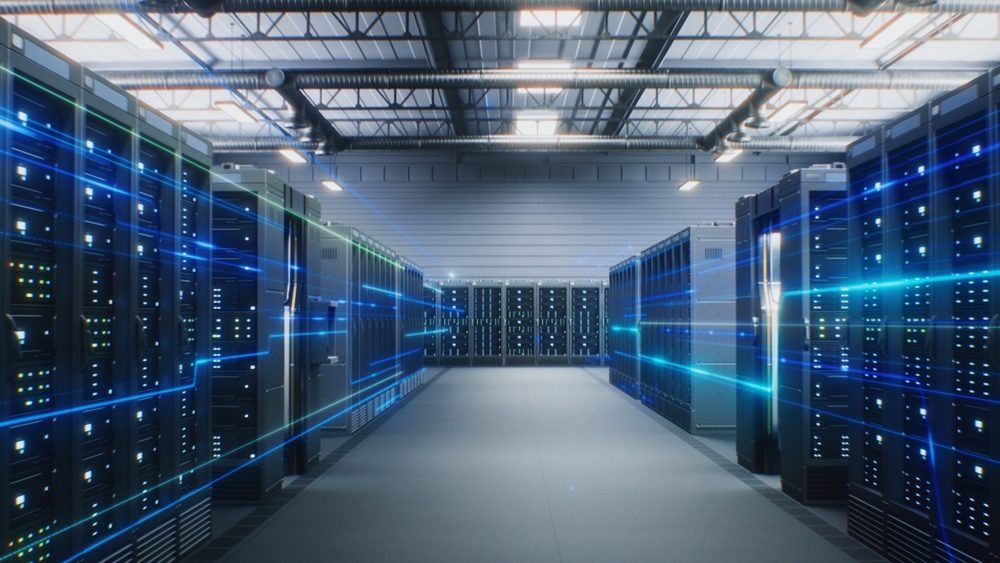
A data center is physical infrastructure that provides what is needed for successful digital transformation – this includes processing power and storage. Quite simply, without data centers it is very difficult to imagine a world with AI and cloud computing operating at scale.
So the race is on to accelerate digital adoption across the Middle East. This is happening at the governmental level as well as within the private sector. It includes a surge in new e-government services, new fintech platforms, as well as AI-driven security and logistics. These applications need data to be processed very quickly and be available at all times. In addition, the data must be stored securely.
Where once data centers were seen as back-office utilities, they are now absolutely vital when it comes to safeguarding national assets and driving economic diversification. As companies and enterprises strive for greater productivity and competitiveness, data centers are the backbone of digital operations.
In this context, data centers can be seen at the same level of importance as transport networks or even energy grids. They have a direct impact on a nation’s economic ambitions.
The UAE’s vision for data centers and AI leadership
The UAE has put data centers as a cornerstone of its national strategy to become a global leader in AI and the digital economy. The government has made it clear that in its long-term policy planning the understanding is that infrastructure development is linked with the ability to innovate.
There are a number of national initiatives that power this massive change. These include the UAE Government Digital Strategy 2025 and the National AI Strategy 2031. Both plans recognise the role of data infrastructure plays where it comes to enabling digital government. In fact, the UAE was far ahead of the game, establishing the Ministry of State for Artificial Intelligence, Digital Economy, and Remote Work Applications long before many global competitors.
According to Samer Alawiah, Managing Director at Daikin UAE, data centers have become central to the country’s economic diversification and digital ambitions, supported by policy alignment, infrastructure investment and regulatory clarity. This integrated approach has created a strong pipeline of hyperscale, colocation and enterprise data center projects across the country.
Why building and operating data centers is resource-intensive
It takes a great deal of resources to first build and then operate a data center. It is a highly complex endeavor, with facilities that need continuous power, advanced systems, and rigorous operational controls. Delivering uninterrupted performance is a must.
Because of this, energy consumption becomes perhaps the most significant challenge. Data centers must operate 24/7 and are often at high utilisation rates in order to meet service-level agreements and performance expectations. Electricity demand becomes enormous along with the knock-on effect on operating costs and impact on the environment.
Costs start rising from the need for specialised equipment and getting ready to scale as needed. Meanwhile, for the environment, operators face growing pressure to reduce carbon intensity and align with national sustainability goals.
The critical role of cooling in data center efficiency
Cooling is one of the most critical aspects of data center efficiency. This means operating within safe temperature ranges and preventing equipment failure.
It’s not uncommon for cooling systems to account for 40% of total energy consumption in a data center. This makes cooling the single largest lever for improving Power Usage Effectiveness (PUE) and reducing long-term operating costs. It’s also important to note that inefficient cooling also shortens the lifespan of equipment.
Cooling solutions engineered for Middle East data centers
Cooling solutions for the Middle East must be specifically engineered to operate reliably in high temperatures and environments with high levels of dust. So a one-size-fits-all approach isn’t going to work for the region’s level of ambition.
Daikin’s data center cooling portfolio reflects this reality, with solutions designed to deliver high efficiency and reliability under extreme conditions. According to Rajneesh VK, Director of Data Center Business at Daikin UAE, the company’s systems are engineered to address the unique challenges faced by regional operators while supporting global performance standards.
The Daikin portfolio includes air-cooled adiabatic chillers, water-cooled chillers, PRO W fan wall units and PRO C CRAH units, all supported by advanced control systems. Daikin’s screw compressor chillers, equipped with in-house designed variable frequency drives, are optimised for part-load efficiency, enabling systems to closely match cooling output with actual demand. This contributes directly to lower PUE and reduced operating costs.
These systems are designed to remain compact despite high cooling capacities, allowing deployment in space-constrained sites. Features such as integrated active harmonic filters and refrigerant-cooled VFDs enhance reliability, particularly in extreme ambient conditions where conventional solutions may struggle.
Smart optimisation and intelligent plant management
Smart optimisation is important because data center operators want to balance a number of different areas – performance, efficiency, along with sustainability. Intelligent plant management systems mean that operators can move from reactive maintenance to getting ahead of the problem with predictive, data-driven decision-making.
Daikin’s iPlant Manager exemplifies this shift. The platform provides centralised optimisation of chiller plants using machine learning and model predictive control to improve energy efficiency across operations. By continuously analysing system performance and external conditions, it identifies optimal operating strategies in real time.
In the UAE, Daikin chillers are equipped with smart connectivity as standard, allowing operators who opt in to remotely monitor and manage their systems. This level of visibility supports faster response times, improved reliability and ongoing efficiency improvements. Over time, intelligent optimisation reduces energy waste, extends equipment life and supports compliance with increasingly stringent sustainability targets.
Choosing the right long-term data center cooling partner
Selecting a cooling partner for a data center is a long-term strategic decision. A cooling system is integral to performance, cost, and risk management. This lasts over the entire lifecycle of the facility, so it’s not a decision to take lightly.
The ideal partner offers far more than equipment, providing engineering expertise, a deep understanding of the specific region’s conditions, as well as the ability to support projects from initial concept right through to ongoing maintenance. The right operator needs to be reliable and can scale as your business scales, remaining constantly responsive for operators managing mission-critical environments.
Daikin is a long-term partner and offers end-to-end support and solutions tailored to each customer’s requirements. This includes system design, fast delivery, installation support and lifecycle services. As Samer Alawiah notes, the objective is to deliver year-round efficiency and reduced running costs while enabling operators to focus on performance, sustainability and growth.
About Daikin
Daikin is a global leader in cooling and climate control solutions, with over a century of innovation and a presence spanning 110 manufacturing facilities across five continents. Its global workforce of approximately 96,000 professionals supports a broad range of industries, including critical infrastructure and data centers.
In the Middle East, Daikin has established itself as a trusted provider of data center cooling solutions engineered for regional conditions. By combining advanced technology, intelligent controls and deep local expertise, the company supports the infrastructure underpinning the region’s AI and digital transformation ambitions.
As data centers continue to shape the Middle East’s digital future, efficient and resilient cooling will remain a defining factor of success. Daikin’s focus on performance, sustainability and building long-term partnerships enables businesses’ and governments’ digital transformation efforts.