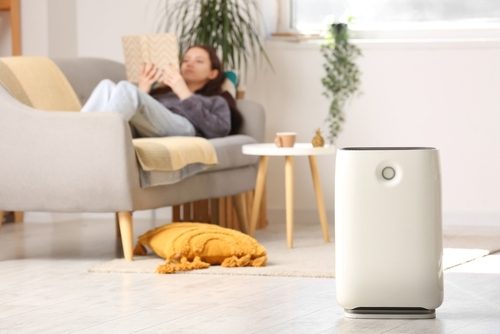
UV air purifiers use ultraviolet light to eliminate bacteria, viruses, and other microorganisms in indoor air. Because the technology feels unfamiliar, people often associate it with hospitals or industrial settings rather than everyday living spaces.
In homes and commercial buildings, UV air purification works quietly in the background as part of a broader indoor air quality strategy. When people don’t really know how the technology is contained or controlled, it’s easy to assume it might be risky. Understanding how these systems are built and used helps separate genuine concerns from common misconceptions.
Are UV air purifiers dangerous?
UV air purifiers are generally safe when they are properly designed, correctly installed, and used as intended. Problems tend to arise from poor-quality equipment, incorrect installation, or misuse rather than from UV technology itself.
In most buildings, UV components are installed inside enclosed HVAC equipment, not in the open air. People and pets are never in contact with the light itself. Certified systems are tested to ensure the UV remains contained and only treats air or internal surfaces as they pass through. When that’s the case, UV air purifiers tend to sit quietly in the background doing their job, not creating safety problems.
How UV air purifiers work
UV air purifiers use UV-C light to neutralise bacteria, viruses, and mould by damaging their genetic structure. Once exposed to a sufficient dose, these microorganisms can no longer reproduce or spread through indoor air.
In HVAC systems, UV lamps are typically installed inside air-handling units or near cooling coils, where moisture and airflow create conditions conducive to microbial growth. As air circulates, microorganisms pass through this enclosed zone and are treated without UV light escaping into the room. Standalone air purifiers operate on the same principle, using sealed housings to contain the process.
The effectiveness of UV air purifiers depends on factors such as exposure time, lamp intensity, and airflow speed. Air that moves too quickly past the UV source may receive less exposure, while slower airflow allows more effective neutralisation of microorganisms. This is why UV air purification is often used as a supporting technology alongside filtration rather than a standalone solution. When integrated into a broader HVAC strategy, UV systems help reduce microbial buildup within equipment while improving overall indoor air quality.
Potential risks and safety concerns
Like most HVAC technologies, the safety of UV air purifiers depends less on the concept itself and more on how the system is selected, installed, and maintained. Many of the risks people worry about are associated with outdated products or poor installation rather than modern, certified equipment. Understanding where problems can occur makes it easier to separate realistic concerns from assumptions that do not reflect how current systems operate.
UV light exposure
UV-C light can be harmful to skin and eyes, which is why people often worry about safety when they hear the term “UV”. The important thing to know is that, in properly designed UV air purifiers, the UV light is sealed inside the system and not exposed to the room.
Problems only tend to arise if a unit is poorly installed, damaged, or interfered with while switched on. When UV air purifiers are professionally installed and properly housed, the light remains contained within the HVAC system or purifier, making direct exposure extremely unlikely in normal home or workplace use.
Ozone generation in low-quality systems
Ozone is another concern that sometimes comes up with UV air purifiers, particularly when people read about older or low-quality systems. Certain UV wavelengths can generate ozone when equipment is poorly designed or lacks appropriate safeguards.
Well-made UV air purifiers are designed to avoid this issue altogether. Certified systems operate at specific wavelengths that minimise or eliminate ozone production and are tested to meet indoor air quality standards, keeping ozone levels within safe limits for occupied spaces.
Improper installation
Improper installation is one of the most common reasons UV air purifiers cause concern. Incorrect placement, loose components, or poor shielding can degrade system performance and create unnecessary safety concerns.
Bad installation can also limit the time air is exposed to UV light, reducing effectiveness while still consuming energy. Professional installation ensures the system is positioned correctly, secured properly, and integrated safely into the HVAC setup, helping it work as intended without added risk.
How to use UV air purifiers safely
Choose certified, high-quality systems
Certified UV air purifiers are tested for safety, performance, and ozone emissions. Selecting systems that meet recognised standards reduces the likelihood of exposure risks or unintended side effects.
High-quality systems use controlled wavelengths, proper shielding, and durable materials designed for long-term, safe operation.
Ensure professional installation
Professional installers can also assess whether a building can accommodate a UV air purification system. Factors such as duct layout, airflow patterns, maintenance access, and existing filtration all influence the system's effectiveness and safety. This assessment helps avoid installations that look good on paper but underperform or raise avoidable concerns in everyday use.
Professional installation ensures the UV system is positioned correctly within the HVAC unit or purifier housing. Correct placement maximises effectiveness while preventing accidental exposure.
Installers also verify electrical connections, airflow alignment, and safety clearances, reducing the risk of malfunction or system interference.
Use correct placement within HVAC systems
Correct placement allows UV light to treat air and internal components efficiently without affecting other HVAC functions. Installation near coils or inside air-handling units is common because these areas provide effective microbial control.
Incorrect placement can reduce performance or increase wear on surrounding components, which is why system layout and design matter.
Perform regular maintenance and inspections
UV lamps lose effectiveness over time, even if they continue to emit light. Regular inspections and scheduled lamp replacement ensure consistent performance and safe operation.
Maintenance also helps identify housing damage, electrical faults, or airflow changes that could affect system safety or efficiency.
FAQs about UV air purifier safety
These are some of the most common questions people ask when considering UV air purifiers for their home or workplace.
Can UV air purifiers produce ozone?
Some low-quality UV systems can produce ozone if they operate at unsuitable wavelengths. Certified UV air purifiers are designed to minimise or eliminate ozone generation.
Are UV air purifiers safe for children and pets?
UV air purifiers are safe for children and pets when the UV light is enclosed, and the system is properly installed. The technology operates within sealed units or HVAC equipment, preventing direct exposure.
Do UV air purifiers require special maintenance?
UV air purifiers require periodic lamp replacement and routine inspections. This maintenance ensures the system remains effective and continues to operate safely.
Can UV air purifiers damage HVAC components?
UV air purifiers do not damage HVAC components when they are correctly installed and maintained. Improper installation or prolonged exposure to incompatible materials can accelerate wear, underscoring the importance of system compatibility.
Conclusion: the benefits of UV air purifiers
UV air purifiers are not inherently dangerous when they are designed for indoor use and installed correctly. Most safety concerns are linked to system quality and installation rather than the technology itself.
When UV systems are selected carefully and properly used and serviced, they can help maintain cleaner indoor air without introducing additional risk to people, pets, or HVAC equipment.
About Daikin
Daikin is a global leader in heating, ventilation, air conditioning, and indoor air quality solutions, employing over 90,000 people worldwide across manufacturing, engineering, research, and service operations. This global scale supports the development of technologies designed to operate safely, efficiently, and reliably in real-world environments.
Operating at a global scale allows Daikin to test and refine technologies across a wide range of climates and building types. This experience informs how indoor air quality solutions are developed, ensuring they remain practical, safe, and effective in real operating conditions rather than just controlled environments.
Daikin’s approach to indoor air quality focuses on responsible system design and integration. UV air purification technologies are designed to operate within HVAC systems in a controlled, enclosed environment, improving air quality while maintaining safety, efficiency, and long-term system performance. Guidance and technical knowledge published through Daikin’s Knowledge Center reflect this emphasis on clarity, accuracy, and responsible use of advanced HVAC technologies.